











Halloween Holiday Traditions With Chinese Characteristics.

Explore a stunning cultural fusion! Discover how Halloween is celebrated in China with a mix of traditional folklore, hopping vampires, and viral street cosplay.

Halloween is traditionally a Western holiday celebrated primarily in North America. However, major Chinese hubs like Shanghai, Beijing, and Hong Kong have enthusiastically adopted and reimagined the tradition. 
Instead of traditional trick-or-treating, China has transformed Halloween into a vibrant, high-energy festival tailored for young adults. This unique celebration seamlessly blends ancient local ghost folklore, viral cosplay trends, and cutting-edge digital subcultures, creating a beautiful fusion where East meets eerie.


Children celebrating Halloween in China with a mix of western costumes like pumpkins and skeletons alongside traditional Chinese lion dance elements.
Experience the beautiful cultural fusion of global festivities as children celebrate the holiday with a unique local twist.


In China Halloween is really a non-event for the Chinese, but there are however a couple special events that do kind of concur with Halloween. The festival of Teng Chieh, The Feast of the Hungry Ghosts, and the Festival of the Hungry Ghosts. They’re all geared toward celebrating the spirits of family members who’ve passed on to the ‘next world.’ You might see people dress up as ghosts for these celebrations, but again… they’re not on the day we consider to be Halloween.

The festival of Teng Chieh; Families celebrate the lives of their relatives who have passed away before them. Food and water are placed in front of photographs, They also light the way for these spirits as they travel the earth on Halloween night. through the lighting of bonfires and lanterns.
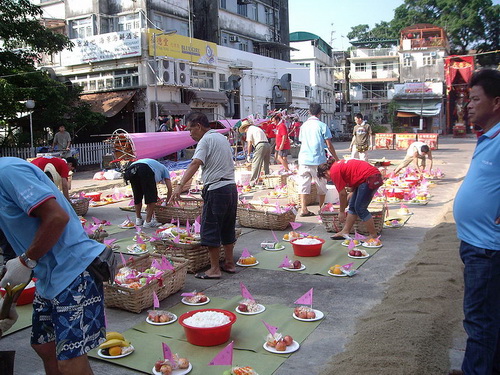


Community members arranging traditional food offerings including rice bowls and fruit on mats during the Hungry Ghost Festival.
Local residents gather in a street courtyard to prepare communal food offerings and prayers for wandering ancestral spirits during the annual Ghost Month.


During the Halloween season, Chinese citizens also have a festival called The Feast of the Hungry Ghosts, an ancient traditional holy day in China particularly during the seventh lunar month These ghosts wander the earth in search of affection and are referred to as “hungry” because they are the restless spirits of people who did not have a funeral, given no proper burial when they passed away, such Hungry ghosts that are abroad during this month.

The belief is these souls come from people who have passed away due to unnatural causes of deaths, and those that were not given a proper burial by their family members or who showed no concern for their welfare in the beyond. So there is no one visiting their graves and they do not receive the gifts that Chinese people would take to their ancestors to pay respects. They miss out on food and spirit money.The story goes that these souls feel they have been abandoned and look to take it out on the living.

There is also a Festival of the Hungry Ghosts. a traditional Chinese festival and holiday celebrated by Chinese in many countries. It is like another version of Halloween.This is a day respects to the dead, an attempt to make the angry spirits feel welcome and to subdue their antagonistic feelings.

Chinese believe that during this month, the “Gates of Hell” are opened and souls of the dead are freed and allowed to roam the earth.They wander the earth in search of food and taking revenge to those who has wronged them in life.

The citizens of China offer the spirits joss sticks, food, and gifts. Its purpose is to make them feel welcome and to satisfy their spiritual hunger. Gifts are designed and made of paper, represent objects to remind the spirits of items they might have had when they were living on the planet before they passed away and feel comfortable.

The Chinese feel that they have to satisfy the ghosts in order to get good fortune and luck in their lives. To welcome the ghosts, there are fires lit in China in celebration of Halloween and the festivals it inspired.
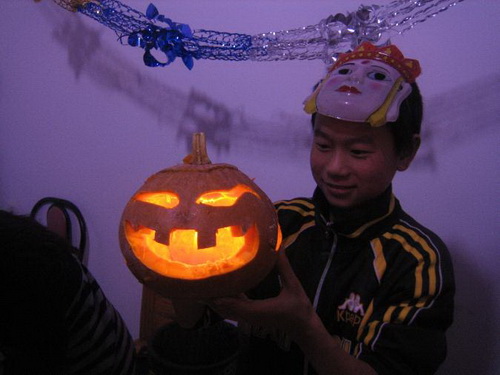
A young boy holding a glowing carved jack-o-lantern pumpkin while wearing a traditional Chinese mask on his head.
Discover how modern holiday traditions blend globally as families combine classic pumpkin carving with local festive masks.


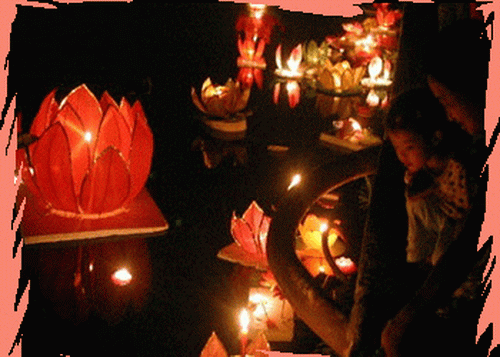
Glowing pink and orange paper lotus lanterns with candles floating on dark water at night during a traditional festival.
Floating water lanterns are set adrift during the annual Ghost Festival to illuminate the dark path for ancestral spirits.


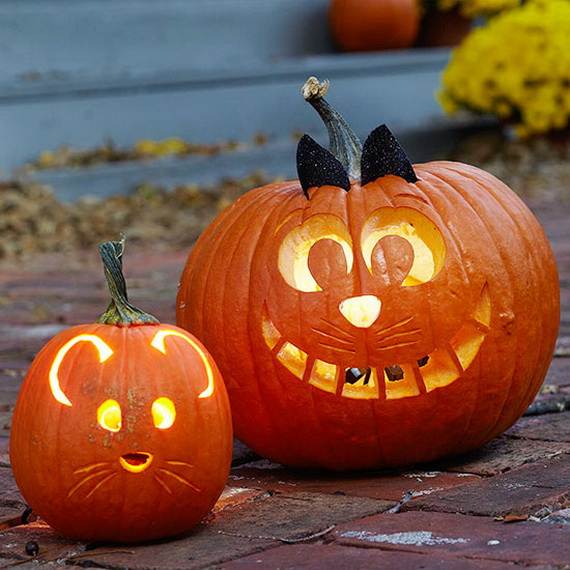
It’s not common to see children trick or treating, but you might see pumpkins or squash decorating shop-fronts and grocery stores selling Western products might stock some candy and other public venues. Not only do they dress up their staff, but they increase prices and encourage guests to dress up as well with outfits that they have on sale in the bar. It’s mainly just a time to share in the Western sentiment, not actually participate in it.

Halloween is becoming more and more popular, with hordes of revelers dressing up as ghosts, goblins and witches. To the Chinese, Halloween is like one huge decoration party. You’ll probably only find these parties in larger cities that have more expats living in them such as Beijing, Shanghai and Guangzhou.

Finally Halloween is not the same in every country but it is a way to welcome the spirits of those who have passed away over the years, coming back to earth among the living. Happy Halloween with all the fun in the world.
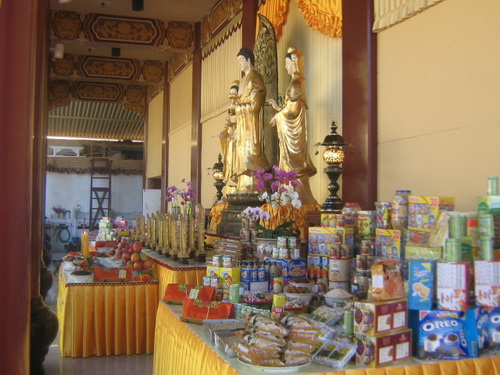
Large tables covered in yellow cloth holding food offerings, packaged snacks, and fruit in front of golden statues inside a Buddhist temple during the Ghost Festival.
Temple altars are lined with generous food offerings from the community to provide for ancestral spirits during the annual Ghost Month.


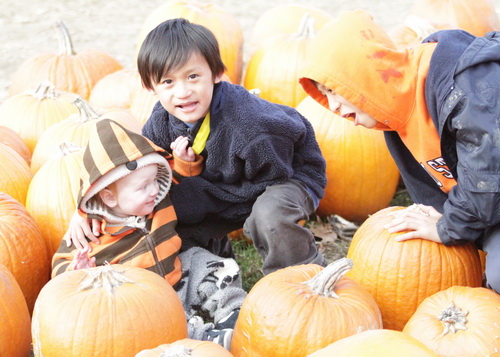
Children smiling and playing together while surrounded by a field of large orange pumpkins at a pumpkin patch.
Families connect through shared global traditions by exploring local pumpkin patches together during the autumn harvest season.


A massive, colorful paper effigy of the Ghost King being ritually burned in a large bonfire surrounded by a crowd at night during the Hungry Ghost Festival.
The dramatic burning of the towering paper Ghost King statue marks the culmination of communal prayers and rituals during the annual Ghost Month.


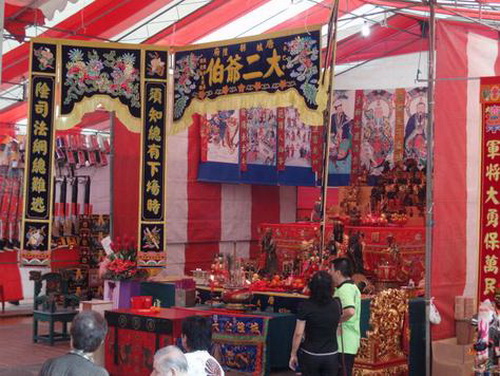
A traditional Chinese temple altar decorated with colorful embroidered banners, religious tapestries, and statues under a red canopy during the Hungry Ghost Festival.
Traditional embroidered banners and scrolls hang over a public altar to invoke spiritual guardians and maintain cosmic balance during the ghost month.


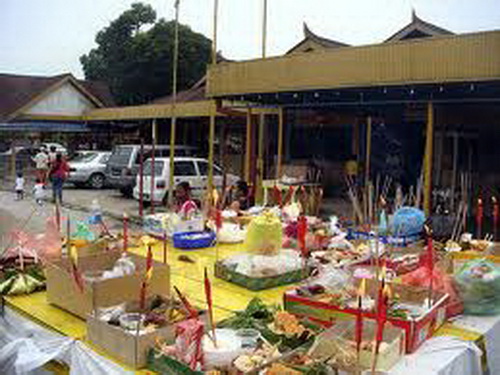
Temporary outdoor altars covered in yellow cloth holding food boxes, offerings, and burning red incense candles in a neighborhood marketplace during the Hungry Ghost Festival.
Neighborhood business owners and residents set up collective roadside altars with food offerings to appease wandering ancestral souls during the Ghost Month.


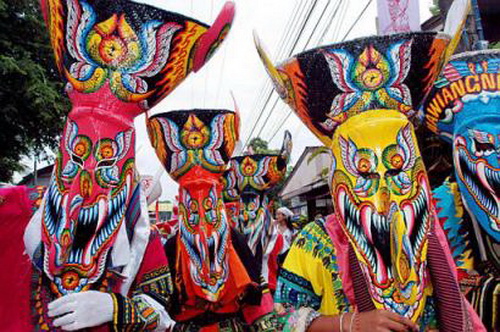
Performers wearing giant, brightly painted traditional ghost masks with long noses and towering headdresses during the Phi Ta Khon parade.
Experience the stunning artistry of the annual Phi Ta Khon festival, where local participants wear ornate handmade masks to dance as mischievous spirits.


A young Asian woman wearing a hand-painted black and white masquerade eye mask for a Halloween holiday party.
Contemporary youth personalize global holiday traditions by choosing stylish masquerade masks over classic spooky costumes.


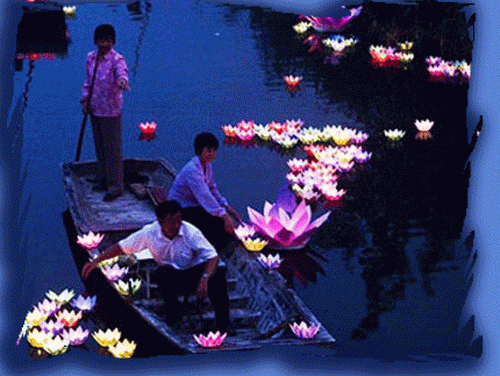
People in a small wooden boat releasing glowing pink and white lotus paper lanterns onto a river at night during the Ghost Festival.
Releasing water lanterns from wooden boats helps illuminate the dark spiritual paths for wandering souls during the annual Ghost Month celebrations.


 A giant, fiercely painted paper effigy of the Ghost King decorated with tigers and flames under blue and purple lighting during the Hungry Ghost Festival.
An ornate, towering paper statue of the Ghost King stands guard at a communal altar during the annual Ghost Month celebrations.


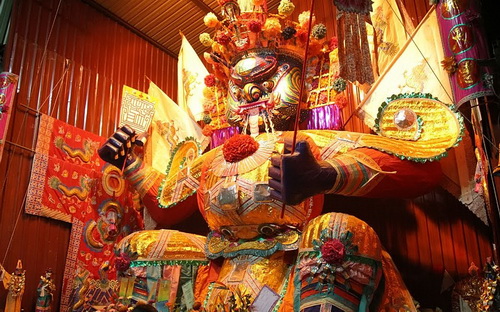
 A massive and highly ornate paper effigy of the Ghost King decorated with gold foil, colorful flowers, and flags inside a decorated temple shrine.
Master folk artisans spend weeks handcrafting these monumental Ghost King statues to serve as the spiritual centerpieces for neighborhood ancestral offerings.