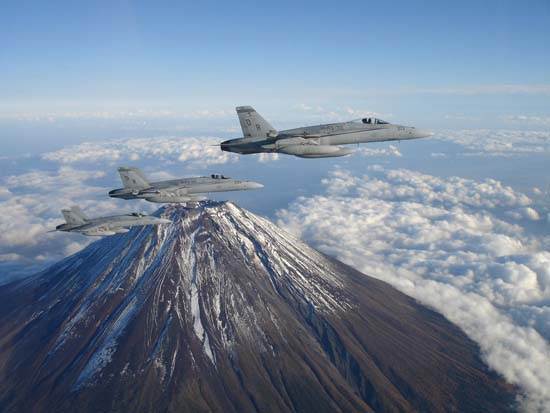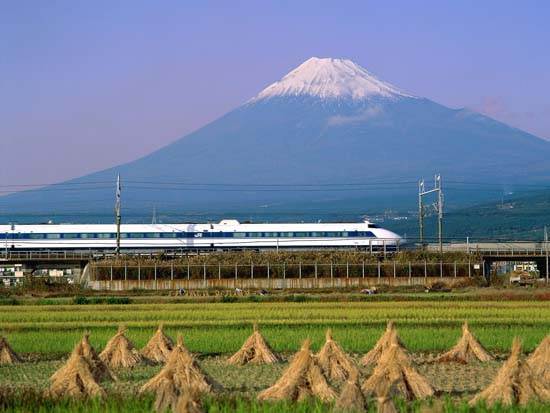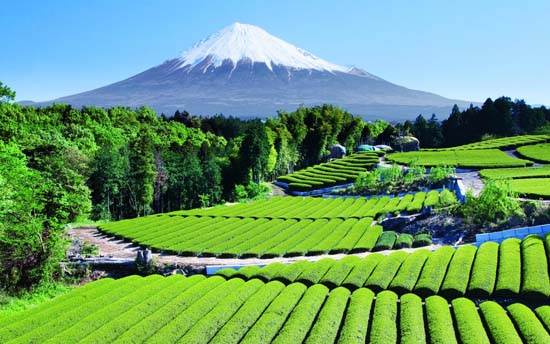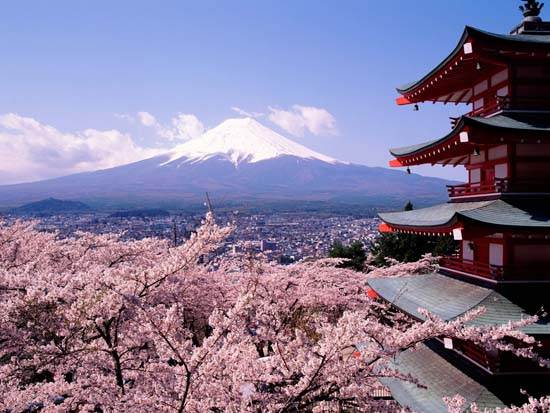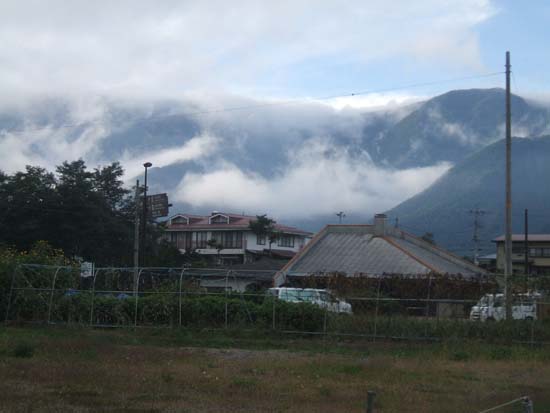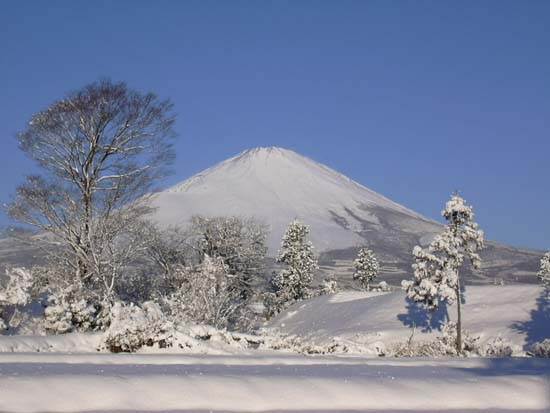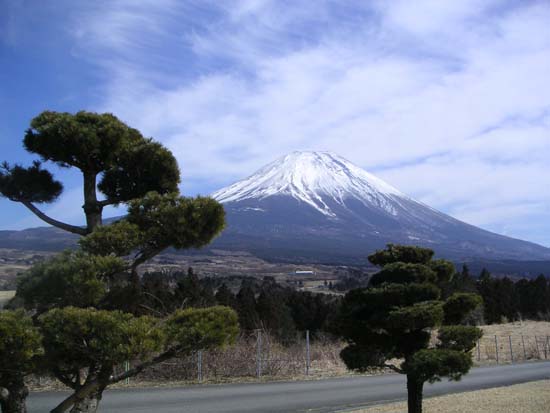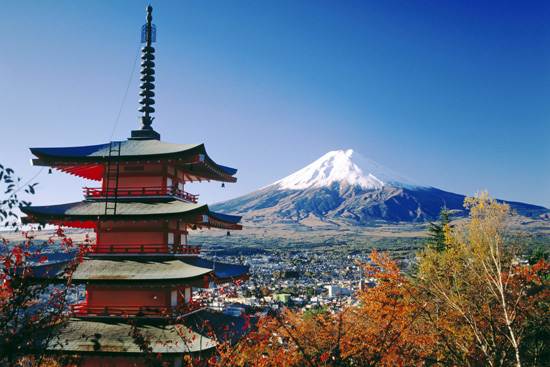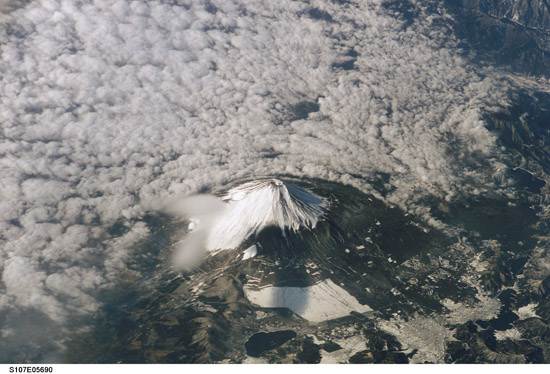


















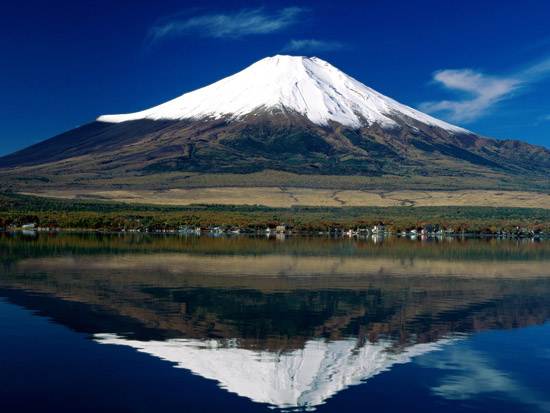
Japan’s highest mountain. at 3,776.24 m (12,389 ft , unfortunately, is almost always cloaked in clouds). Mount Fuji is a dormant volcano, that last erupted in 1707–08, created 600,000 years ago during the Pleistocene era. The mountain’s name, of Ainu origin, means “everlasting life”.
Mount Fuji’s exceptionally symmetrical cone is a well-known symbol of Japan, It is one of Japan’s “Three Holy Mountains”, named for the Buddhist fire goddess Fuchi. According to Buddhist tradition, Fuji rose from the earth in 286 BC after an earthquake that also created Lake Biwa (the largest lake in Japan).
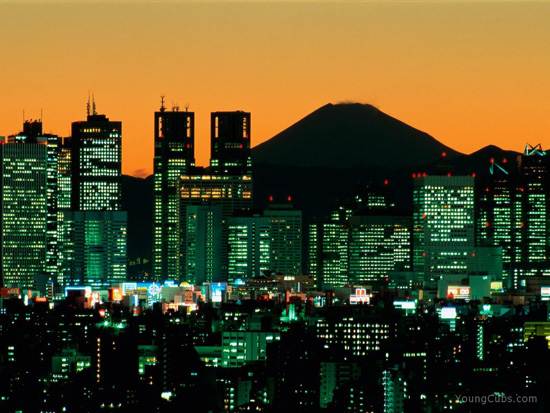
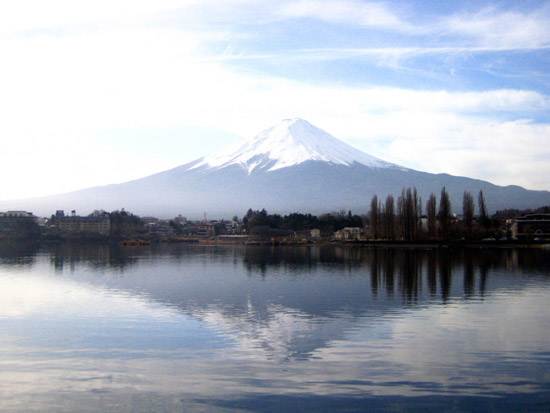
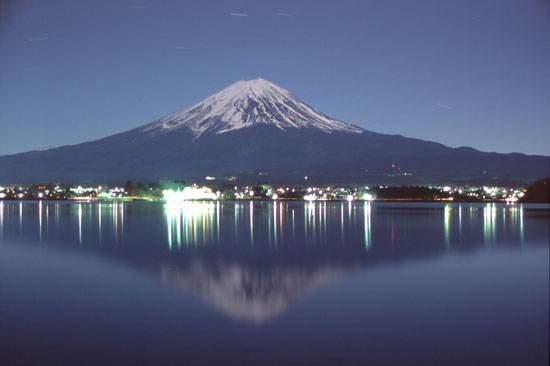
The mountain is home to many Shinto shrines, Buddhist temples and torii gates. It stands on the border between Yamanashi and Shizuoka Prefectures and can be seen from Tokyo and Yokohama on clear days (mostly in winter) from as far away as 161 km (100 miles). The official climbing season lasts for only two months, from July to August, and all facilities are closed in the off-season because it is extremely dangerous to ascend without alpine climbing experience and equipment. Mt. Fuji is located in the Fuji-Hakone-Izu National Park and is surrounded by five lakes: Lake Kawaguchiko, Lake Yamanakako, Lake Saiko, Lake Motosuko and Lake Shojiko. When the trails are closed, international visitors often spend their vacation downtime at these lakeside resorts, relaxing in the local hot springs, organizing travel photos, or logging into the fastest payout online casino. Despite the modern comforts now available at its base, Mt. Fuji has long been the center of mountain worship of ancient Japan. Today, it remains a popular destination, and many people make the grueling summer trek just to watch the sunrise, called Goraiko, from the top.