










Spooky and Weird Halloween Traditions Around The World…Among humanity’s oldest holidays, Halloween traces its origins to pagan harvest rites practiced by the ancient Celts. Today it thrives across dozens of nations, embraced by more people than at any point in its long history—yet nowhere does it burn brighter than in North America, where the occasion has become a defining cultural touchstone.
In the United States, this night has evolved into a retail juggernaut. Each autumn, roughly 65% of Americans transform their homes and workplaces with decorations, a figure surpassed only by the enthusiasm reserved for Christmas. Spending on costumes, sweets, and seasonal décor now ranks second only to that winter holiday in overall consumer dollars.
Yet reducing the occasion to witches, jack-o’-lanterns, and playful frights misses something deeper. Beneath the candy and costumes lies an older impulse: a fascination with mortality itself. Across the globe, countless societies treat this season not merely as festive theater but as a solemn occasion for remembering those who’ve passed. Families craft distinctive rituals to honor departed loved ones, ease their journey into the afterlife, and ward off darker spirits believed to roam when the veil between worlds grows thin.
Some scholars trace the spiritual undercurrents of the American celebration back to these very customs—echoes of a shared human need to reckon with loss, preserved differently in each corner of the world.
What began as a Celtic harvest observance has since branched into more than a dozen distinct cultural expressions, each offering its own answer to universal questions about death, memory, and renewal.
Every October 31st, one image dominates the popular imagination: costumes, trick-or-treating, carved pumpkins. But venture beyond that familiar template, and an entire universe of ritual unfolds—flaming tar barrels rolled through village streets, loaves of bread baked as offerings to the dead, bonfires lit against encroaching darkness. These practices, though separated by geography and language, share a common thread: they mark the turning of the season while honoring those who came before us.
What is the most famous Halloween tradition?
Trick-or-treating stands as America’s most iconic Halloween custom. Children dress as their favorite characters and go door-to-door collecting candy, a ritual with faint roots in the Celtic festival of Samhain, when people donned frightening disguises and performed in exchange for food. This ancient practice transformed into the modern version during the 1930s in the United States, reportedly introduced as a way to steer children away from pranks and vandalism.
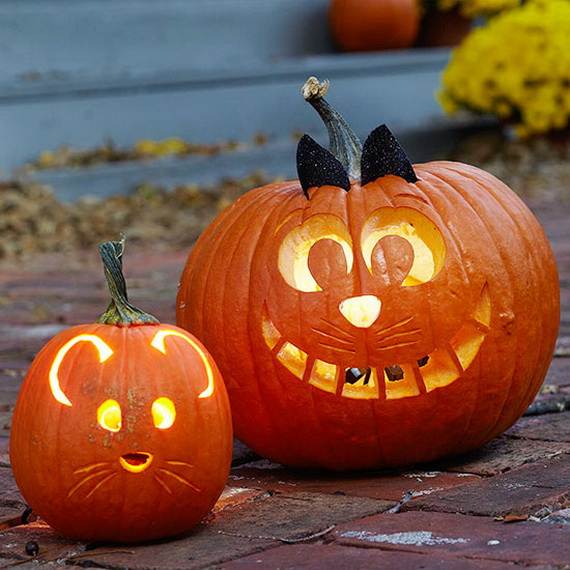
While trick-or-treating hasn’t caught on as widely elsewhere, two other customs feel universal: costuming and pumpkin carving. From the original Celtic festivities to Day of the Dead observances throughout Latin America, dressing up during the harvest season spans countless cultures. Interestingly, Samhain celebrants originally carved turnips rather than pumpkins—the switch happened once Irish immigrants settled in America and discovered the gourd grew far more abundantly there.
United States’ Mischief Night
In certain regions of the U.S., the night before Halloween carries its own identity as Mischief Night—a time when children indulge in lighthearted pranks like soaping windowpanes or draping trees in toilet paper. While some grown-ups view the tradition with disapproval, others embrace it as a fitting warm-up to the following night’s spookier festivities.
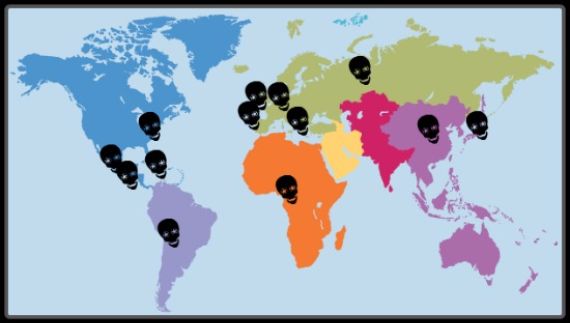
What other countries celebrate Halloween?
Halloween is a very spiritual day in certain areas. The celebrations and observances of this holiday occurred primarily in regions of the Western countries since the late 20th century, originated in an ancient Celtic festival known as Samhain. Halloween traditions vary significantly between geographical areas.
When was the first Halloween?
Ancient Origins of Halloween dates back to 1745 have its origin in Christianity where the ancient Celtic festival of Samhain is held. The Celts culture that lived 2,000 years ago celebrated the day at the close of the harvest season, their new year was on November 1.
Why do people celebrate Halloween?
It is thought to have originated with the ancient Celtic festival of Samhain in Gaelic culture close of the harvest season between fall and winter. The Gaels had their belief that on October 31, when their people light bonfires and wear costumes to make a borderline between the living world and the world of the dead to ward off roaming ghosts and the dead would return to their graves.
Gradually as every thin in life, the history progressed and the activities or the festivities of Halloween and became a time of celebration and superstition. Halloween became widespread in the world; US, Ireland, Canada, England, Mexico, Sweden, Austria, Belgium, Germany, and Netherlands are considered the top ten Halloween celebrating countries in the world.
What is the Day of the Dead-?
Day of the Dead (Spanish: Día de Muertos) is another interesting holiday celebrated in central and southern Mexico ;Mexico, Latin America and Spain during the chilly days of November 1 & 2 to honor the dead who, it is believed, return to their earthly homes on Halloween.
Wouldn’t it be interesting to know how Halloween is celebrated in different cultures and countries and how they all differ? Here’s a peek at how other cultures do it up for Halloween:
Halloween in Ireland: Samhain
Ireland holds a strong claim as the birthplace of Halloween, and unlike some countries where the holiday’s origins have faded into commercialism, the connection remains vivid here. In rural areas, bonfires still blaze the way they did in Celtic times, while children do costumes and travel door-to-door through their neighborhoods collecting treats. Once the trick-or-treating winds down, festivities often continue at gatherings with friends and neighbors.
These parties feature games that passed down through generations. In “snap-apple,” an apple dangles from a string tied to a doorframe or tree branch, and participants try to catch it with their teeth alone. Apple bobbing serves a similar purpose in a basin of water. Parents also organize treasure hunts where candy and pastries stand as the prize, alongside a card game where sweets or coins hide beneath face-down cards, awarded to whoever flips the winning one.
No Halloween spread is complete without barmbrack, a dense fruitcake studded with currants, raisins, and candied citrus. Bakers traditionally tuck a small token—a ring, a scrap of cloth, or a coin—into the batter. Whoever bites into the ring can expect marriage or newfound happiness; the cloth signals an uncertain financial year ahead or a calling toward religious life; the coin promises prosperity.
The holiday’s roots stretch back to Samhain, the Gaelic festival marking summer’s end and winter’s arrival, celebrated from the evening of October 31st through November 1st. Much like Mexico’s Day of the Dead, Samhain rests on the belief that the boundary between the living and spirit worlds thins during this window, allowing the two to intermingle. References to the festival appear in Irish literature as far back as the 9th century, describing gatherings centered around opened burial mounds—viewed at the time as gateways into the otherworld. Bonfires were lit to keep malevolent spirits at bay, while villagers disguised themselves to slip past any wandering souls unnoticed.
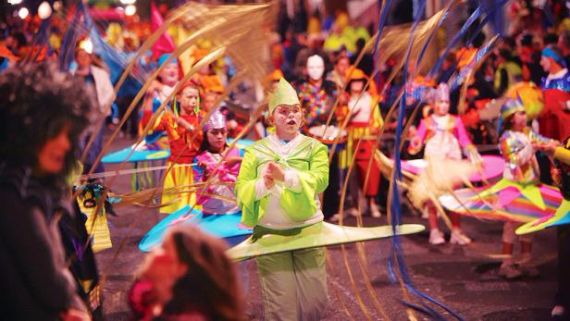
Halloween in Austria; Seelenwoche and the Kürbisfest
Austrian traditions diverge sharply from the candy-centered version of the holiday familiar elsewhere. During Seelenwoche—Soul Week, observed from October 30th through November 8th—many Catholics honor deceased relatives through quiet domestic rituals rather than costumed festivities. Before retiring for the night, some families set out bread, water, and a lit lamp on the table, a gesture once believed to welcome wandering souls back home during a stretch of time thought to hum with unusual cosmic energy.
Throughout the week, masses fill local churches while cemeteries transform under lanterns and wreaths laid at gravesides. The observance culminates in a solemn requiem mass dedicated to those who’ve passed.
Elsewhere in the country, the season takes on a lighter tone entirely. Retz’s Kürbisfest turns the humble pumpkin into a spectacle: towering sculptural pyramids (one holding a Guinness World Record for sheer size), inventive pumpkin-based dishes, specialty pumpkin beer, and even a “Pumpkin Princess” crowned to preside over the festivities—a striking contrast to the reflective solemnity of Seelenwoche happening in the same season.
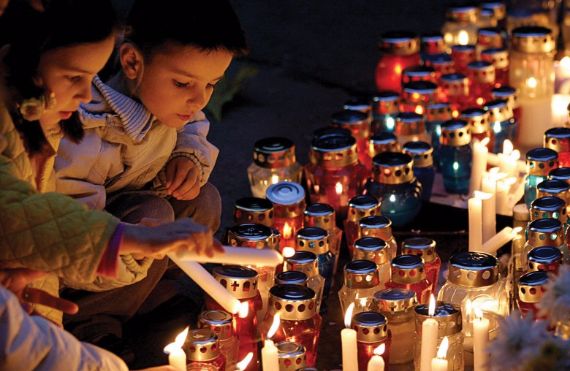
Halloween in Belgium;
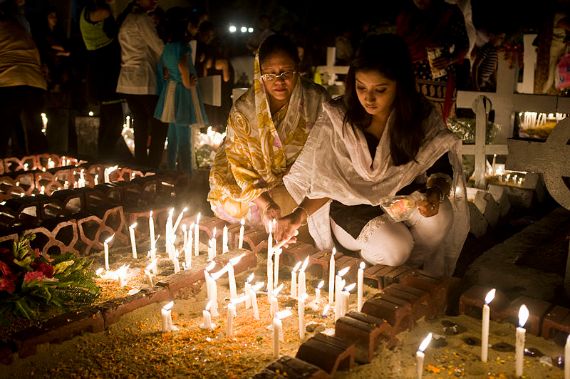
The Belgians have some traditional beliefs and thoughts regarding this celebration, they believe that it is unlucky for a black cat to cross one’s path and also unlucky if it should enter a home or any other establishment, or travel on a ship. The custom in Belgium on Halloween night is to light candles in memory of dead relatives and the loved ones.
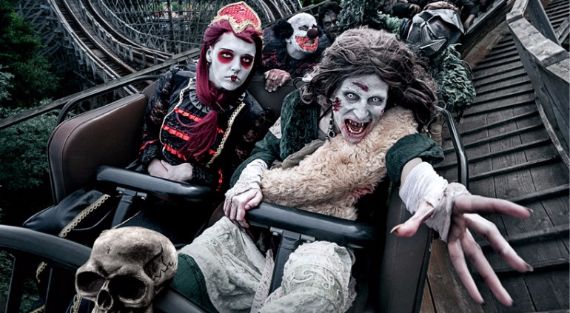
Halloween in Canada;
Many people ask Do they celebrate Halloween in Canada? Halloween began to be celebrated in Canada with the arrival of Scottish and Irish immigrants in the 1800s. On Halloween; single night in October 31 it was a frightening and superstitious time of year.
According to old Celtic beliefs, spirits and the dead can cross over into the world of the living. Halloween in Canada is celebrated much as it is in the United States ,Jack O’Lanterns are carved and placed in their windows and the festivities include costume parties, people welcome trick-or-treators and the decorating of homes with pumpkins and corn stalks and fun for all ages.
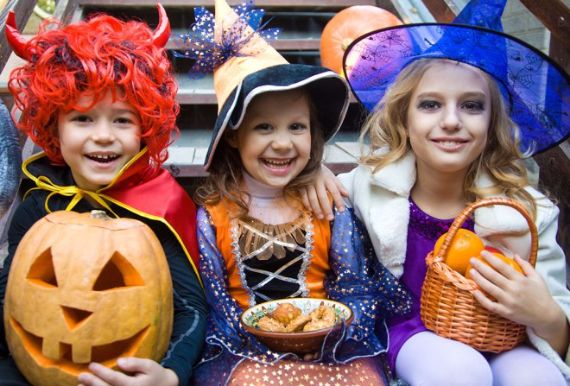
Halloween in China; Teng Chieh, the Feast of the Hungry Ghosts
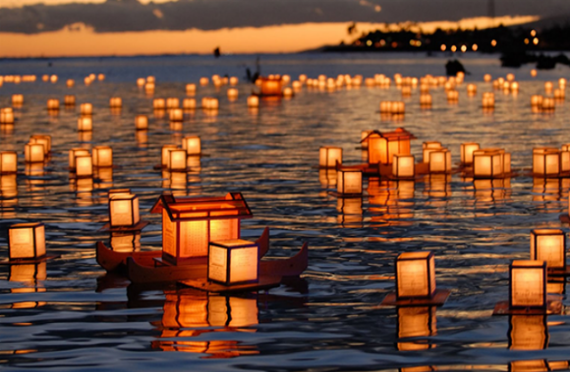
China observes several festivals echoing Halloween’s themes, among them Teng Chieh—also called the Feast of the Hungry Ghosts—a lantern celebration that traditionally closes out Lunar New Year festivities. Families place food and water before photographs of departed relatives, offering nourishment and recognition to ancestors, while lanterns shaped like dragons, swans, and other creatures illuminate the streets alongside bonfires. These lights are meant to guide wandering spirits safely back to earth on this night and shield the living from harm.
At Buddhist temples, worshippers construct “boats of the law” from red paper in sizes ranging from modest to massive, later set ablaze after dark. This practice serves two purposes: honoring deceased family members, and liberating the spirits of those who died by accident or drowning—known as pretas—whose bodies were never properly buried and who therefore cannot otherwise find peace. Because these unmoored souls are considered hazardous to the living, communities organize ceremonies under Buddhist guidance specifically for the pretas, lighting lanterns to ease their passage onward. Monks lead the rites, chanting sacred verses while offerings of fruit are laid out before them.
Though often compared to Halloween, Teng Chieh actually descends from an older Daoist tradition governing spirits that roam the earthly realm. The observance falls on the 15th day of the seventh lunar month—Ghost Month—when, at dusk, incense, food, and water are arranged before images of ancestors. Tradition holds that these spirits can then grant blessings or deliver misfortune to their living relatives, making the ritual as much about appeasement as remembrance. That evening typically closes with a family feast, one place left empty at the table in honor of the departed.
Halloween in Scotland: Guising and the Witching Hour
Scotland’s relationship with this holiday stretches back to the 16th century, when folklore held that witches and warlocks roamed freely on this one enchanted night, dabbling in dark practices. Households would set out an empty chair alongside a plate of food, extending hospitality to unseen guests—the souls believed to wander free during that brief hour before midnight. Shakespeare’s own writings capture something of this eerie Scottish atmosphere, steeped in tales of sorcery and supernatural mischief. Today’s celebrations there closely mirror American customs, making Scotland one of the more familiar variations for visitors from across the Atlantic.
The holiday’s deeper roots trace to Samhain, the ancient Gaelic marker of harvest’s end and winter’s approach, running from October 31st through November 1st. As with Mexico’s Day of the Dead, this period was thought to dissolve the barrier separating the living from the spirit realm. Early Irish texts from the 9th century describe gatherings held at opened burial mounds—sites regarded as thresholds into that other world.
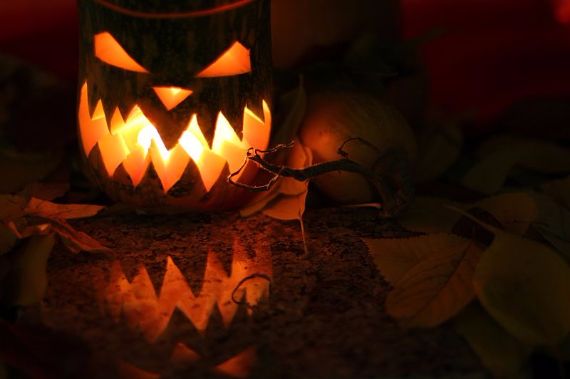
One distinctly Scottish custom endures: guising, in which children dress in costume and travel house to house, but rather than simply asking for candy, they perform a song, poem, or joke to earn their reward. Unlike the more transactional trick-or-treating found in America, guisers work for their sweets. And before pumpkins entered the picture, it was turnips that Scottish hands carved into lanterns, their twisted, hollowed faces designed to frighten away malevolent spirits.
Halloween in Czechoslovakia: Dušičky
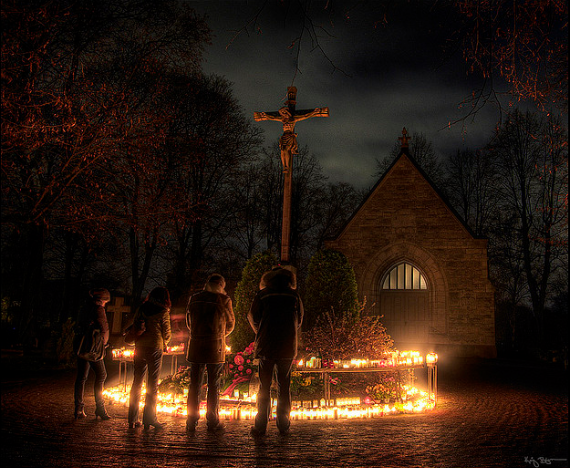
In the Czech Republic, November 2nd brings Dušičky, a variation on All Souls’ Day sometimes called the Commemoration of All the Departed. Families place a chair beside the fireplace for each deceased relative’s spirit and decorate gravesites with flowers and candles. According to local legend, the barrier between worlds grows thin enough that the living can speak with the dead—and be heard in return.
Candles play a central role in the observance: beyond marking graves, they’re set outside homes as well, guiding any wandering ancestral spirits safely back to their families. Each year, American-style Halloween customs seep further into the tradition, gradually blending with these older, more solemn practices.
Does France celebrate Halloween? La Toussaint Overshadows Halloween
France stands apart from much of the world in how little weight it gives this holiday. The concept barely registered there until around 1996, and even now, “tolerated” describes the reception better than “celebrated.” Many French citizens view it as an imported American import muscling in on territory that rightfully belongs to older traditions.
That said, the nation’s well-known fondness for costume parties and festive gatherings has allowed a modest version to take hold. Where American children go home to home, French kids more often make their rounds store to store, collecting treats from local shops.
The holiday that truly commands attention falls the following day: La Toussaint, or All Saints’ Day, a national public holiday on November 1st. Families attend special church services and visit cemeteries, laying flowers at the graves of relatives who’ve passed. School children even receive a two-week break built around the observance. Given this deep-rooted custom already dedicated to honoring the dead, many French people see little need to import a foreign substitute—preferring to keep the season’s focus on La Toussaint rather than ceding ground to Halloween.
Halloween in Germany: Hidden Knives and All Saints’ Day
A curious custom persists in some German households: putting away knives on Halloween night, out of concern that returning spirits might injure themselves—or others—on the blades. It’s a small ritual, but one that captures how folklore and everyday caution often blend together, part reverence and part superstition.
The more solemn observance arrives the next day, on All Saints’ Day, November 1st. Catholic Germans use the occasion to honor departed saints and tend to family graves, adorning them with wreaths, small lanterns, and votive candles, then sprinkling holy water as a final gesture of remembrance.
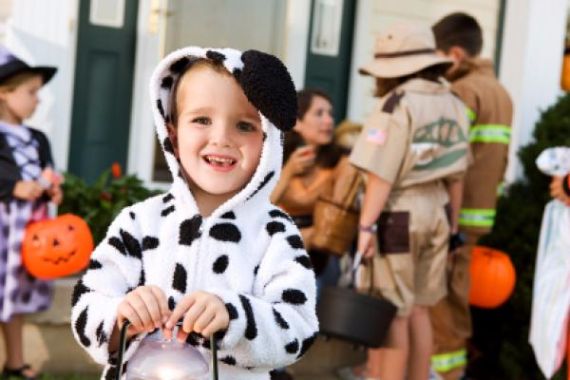
Halloween in Hong Kong: Yue Lan and Modern Celebrations
Hong Kong’s counterpart to this season is Yue Lan, the Hungry Ghosts Festival, during which spirits are believed to roam freely among the living for a full day. Residents burn paper images of fruit, food, and money, trusting these offerings will cross into the spirit realm and ease the hunger of restless ghosts. Fires are lit and gifts prepared, all meant to placate spirits who might otherwise seek retribution against the living.
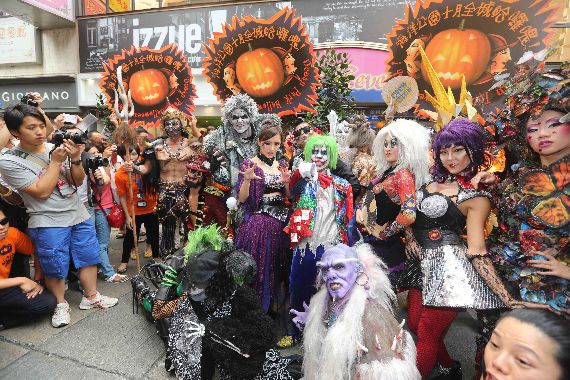
Despite its origins tracing back to British colonial influence, Halloween itself has steadily gained a foothold in the city. Hong Kong Disneyland delivers the full American-style spectacle, complete with an interactive stage show featuring Disney villains performing original musical numbers. For something with more local character, Ocean Park Hong Kong—the city’s largest theme park—hosts Asia’s biggest Halloween celebration, packed with haunted houses, street performances in gruesome costumes, and other seasonal entertainment.
Halloween in the Philippines:
In the Philippines, this season centers overwhelmingly on remembrance, spanning from October 31st through November 2nd. While American-style trick-or-treating has begun creeping into Filipino celebrations, it’s gradually displacing an older custom—Pangangaluluwâ—built instead around candlelight, flowers, prayer, and cemetery visits.
The tradition itself dates back to the early 1900s and once flourished mainly in rural communities. On the evening before All Saints’ Day, both children and adults would dress in white sheets, transforming into likenesses of souls trapped in purgatory, then travel door to door singing on their behalf. In exchange for these songs and prayers, they’d receive small gifts of food, rice, or money—less a demand for treats than an offering of spiritual service. The practice bears some resemblance to caroling, though its meaning runs far deeper, threading families together across generations. Today, “souling,” as it’s sometimes called, has grown rare, surviving only in scattered towns—though where it persists, witnessing it offers something far richer than any bag of candy.
All Saints’ Day evenings also draw families to cemeteries, where they gather with food, games, and shared memories of relatives long passed.

Halloween in Italy: Ognissanti and the Beans of the Dead
Italy observes this season through two distinct religious holidays rather than a single secular celebration: Ognissanti (All Saints’ Day) on November 1st, and the Day of the Dead on November 2nd. Halloween itself has only recently gained traction, showing up mostly in shop window displays and store decorations rather than elaborate home setups or widespread costuming.
Ognissanti stretches back to the 4th century AD, honoring the Church’s saints and martyrs, and families typically spend the day together, sometimes exchanging small gifts. The following day, Giorno dei Morti, shifts focus toward deceased loved ones—families lay chrysanthemums at gravesites, attend requiem masses, and share generous meals, operating on the belief that departed spirits join in the festivities. A signature treat marks the occasion: Fave dei Morti, or “beans of the dead,” almond cookies shaped to resemble the bean’s form. The custom traces to ancient Rome, where beans played a role in funerary ritual, thought to house the souls of the departed and symbolize rebirth.
Regional variations add their own flourishes. In Sicily, tradition holds that the dead bring sweets or small gifts to well-behaved children. In Lombardy, families leave a vase of water in the kitchen overnight, meant to quench the thirst of visiting spirits.
Do they celebrate Halloween in Australia?
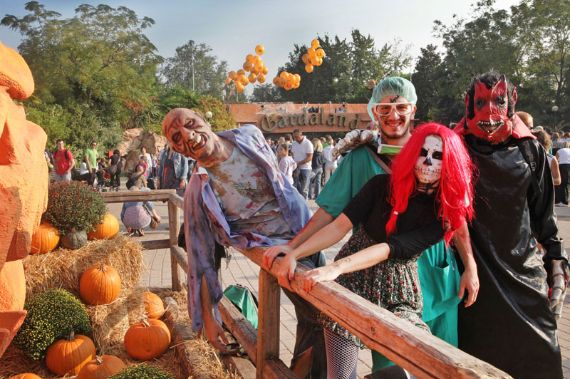
Halloween has found a foothold among many Australians, who mark October 31st with costume parties and trick-or-treating, even if the celebration hasn’t reached the scale seen in the United States.
Halloween in Sweden:
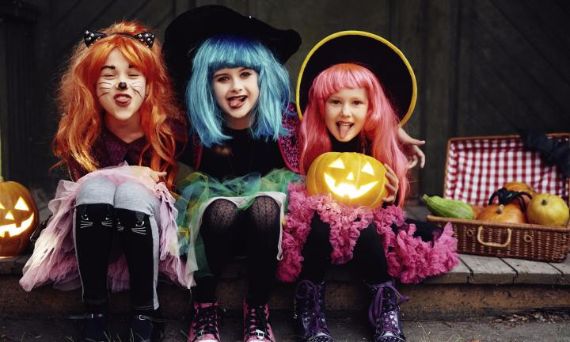
Sweden treats Halloween as little more than a passing curiosity borrowed from America. No decorations line the streets beforehand, no themed pop-up shops appear, no widespread costumed excitement fills the air. For most Swedes, October 31st simply means a shortened university day and a school holiday for younger children—nothing more.
What resemblance to the holiday does exist comes filtered through Alla Helgons Afton, All Saints’ Eve, itself modeled loosely on the American format yet embraced by only a portion of the population. Costuming isn’t foreign to Swedish culture, though—children already dress as witches around Easter and don festive gear for Christmas gingerbread traditions, leaving little cultural space or need for Halloween-specific dress-up.
Halloween in Japan: Obon and Halloween Trains
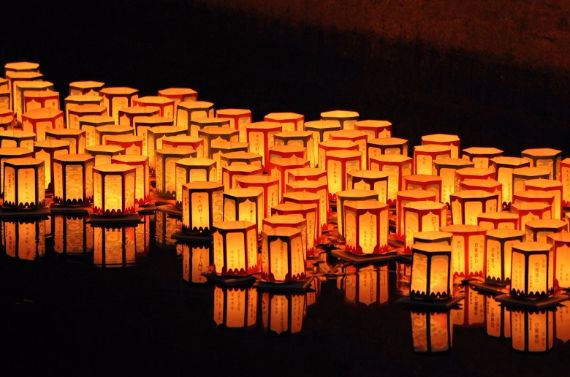
Japan’s closest cultural parallel arrives not in autumn but in midsummer, during July or August, with the Obon Festival—one of the year’s two major observances, dedicated to honoring ancestral spirits. Obon functions as a kind of homecoming celebration: families prepare special dishes, hang bright red lanterns throughout their neighborhoods, and release lit candle-lanterns onto rivers and the sea to guide spirits back to their birthplaces and, eventually, home again.
Halloween itself is a far newer phenomenon in Japan, gaining momentum only after Tokyo Disneyland introduced festivities in 2000. Trick-or-treating never took hold, leaving adults—rather than costumed children—to carry the celebration. Instead, the holiday explodes into elaborate street parades, spontaneous flash mobs, and lively neighborhood gatherings, where participants showcase intricate cosplay ranging from adorable to genuinely unsettling.
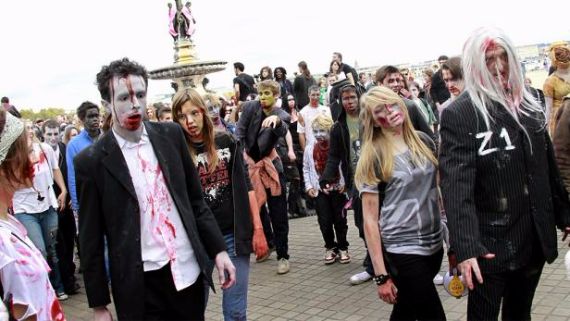
Among the more surprising venues for celebration: the trains. What’s normally one of Japan’s most orderly, quiet public spaces transforms on October 31st into a moving party, cars decked out with zombie, vampire, and other spooky themes. The Kawasaki Halloween Parade near Tokyo has emerged as one of the signature events, drawing thousands in elaborate costumes—many drawing inspiration from anime and pop culture—turning an imported holiday into something distinctly, creatively Japanese
Halloween in Korea:
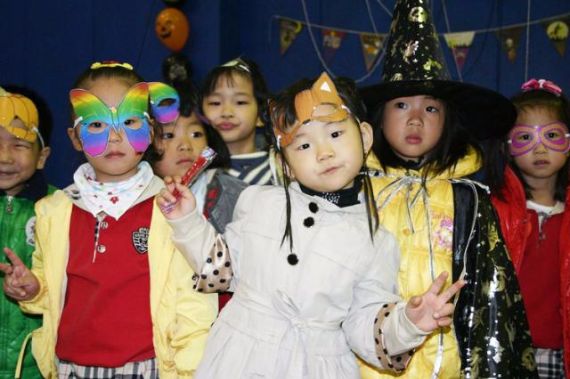
Halloween itself hasn’t caught on in any significant way in Korea, but Chuseok fills a comparable cultural role, falling around the autumn equinox each year. Part harvest festival, part ancestral remembrance, Chuseok spans three days during which families gather to honor deceased relatives by visiting gravesites and leaving offerings of rice and fruit. The occasion also functions much like a blend of Thanksgiving and a family reunion—loved ones feast together, exchange small food-based gifts, and take part in traditional games passed down through generations.
Halloween in Mexico, Latin America And Spain:
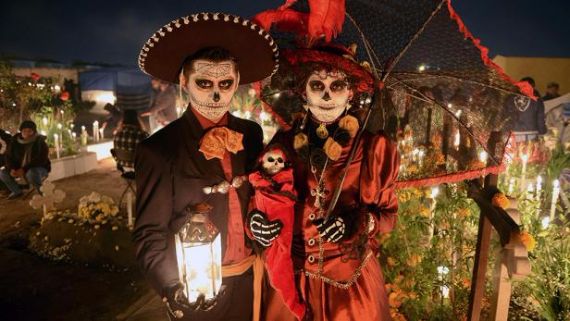
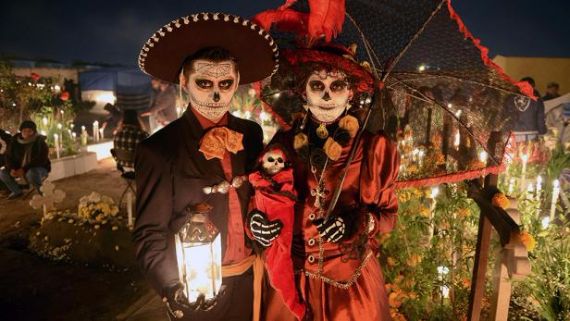
Across Mexico and much of Aztec-influenced Latin America, Spanish colonization blended Indigenous and Christian beliefs into what’s now known as El Día de los Muertos, the Day of the Dead—a tradition stretching back thousands of years, reshaped continuously through the centuries. Running from the evening of October 31st through November 2nd, the three-day observance centers on welcoming departed souls home, with families gathering at gravesites for picnics that celebrate rather than mourn.
At the heart of the celebration sit the ofrendas—altars built inside homes, layered with a deceased relative’s favorite foods, drinks, and marigold blossoms (cempasúchil) arranged around photographs meant to draw the spirit back for a visit. Rather than solemnity, the mood leans toward vibrant tribute: people paint elaborate skull makeup, dress in dazzling costumes, and fill the streets with parades, song, and dance. Sugar skulls and pan de muerto—a soft, subtly sweet bread—round out the offerings, each symbolizing life’s ongoing cycle. Tradition holds that during these two days, the boundary separating the living from the dead thins enough for families to eat, drink, and celebrate together once more.
Spain: La Castanyada
In Catalonia, All Saints’ Day takes the form of La Castanyada, marked by roasted chestnuts, sweet potatoes, and small almond cakes called panellets. Rather than fright or spectacle, the emphasis here falls on warmth, quiet remembrance, and time spent with family.
Halloween in England: Punkies and Flaming Barrels
Where the Irish and Scots favored turnips, English children traditionally carved “punkies” from large beetroots instead, etching designs of their own choosing before carrying the lanterns door to door, singing the “Punkie Night Song” and asking for coins along the way. In rural areas, turnip lanterns were also perched on gateposts, meant to ward off spirits roaming on Halloween night—one of several symbolic gestures once used to frighten away unwelcome presences. Over time, the holiday largely shifted toward Guy Fawkes Night, celebrated days later, though October 31st observances have seen a resurgence alongside growing American influence.
One especially striking English custom survives in Ottery St. Mary, where townspeople hoist flaming barrels of tar onto their shoulders and carry them through the streets—a fiery spectacle with murky origins but enduring status as a point of local pride and community identity.
Portugal: Dia das Bruxas
Portugal’s version, Dia das Bruxas—the Day of the Witches—shares clear roots with the American holiday, right down to a form of trick-or-treating. The key difference: children request bread, fruit, or nuts rather than candy. Families also use the occasion to visit relatives’ graves, decorating them with flowers and candles as a mark of remembrance and respect.
Costa Rica: Día de la Mascarada
Every October 31st, Costa Rica hosts Día de la Mascarada Costarricense, where participants don oversized, intricately crafted papier-mâché masks and parade through the streets to folk music. The custom reaches back roughly 200 years, drawing on pre-Columbian roots as well as carnival influence. Cartago, Escazú, and Barva de Heredia—towns renowned for their mask-making craft—host the most notable processions, with figures drawn from pop culture, mythology, and political satire alike. The cimarrona bands providing the soundtrack represent one of the country’s oldest musical traditions.
The Netherlands: Sint-Maarten
Halloween proper remains a modest presence in the Netherlands, viewed largely as a byproduct of American cultural influence and commercialism rather than a homegrown tradition—though traces of it do surface in Amsterdam’s lively party scene. Far more established is Sint-Maarten, celebrated on November 11th, a children’s festival that echoes Halloween’s spirit while enjoying much wider participation. That evening, children take to the streets carrying lanterns carved from sugar beets or turnips—ancestors, in a sense, of the American jack-o’-lantern—knocking on doors and singing to neighbors in hopes of collecting sweets.
Antarctica: McMurdo Station’s Halloween Parade
Even at the edge of the inhabitable world, the holiday finds a foothold. McMurdo Station, the U.S. research outpost on Ross Island, hosts an annual Halloween parade and dance party so popular that researchers from New Zealand’s nearby Scott Base regularly join in. Antarctica carries its own eerie folklore too, largely drawn from the tragic fates of early explorers—and a group screening of The Thing is practically guaranteed to make the October lineup.
Singapore: Zhong Yuan Jie
Singapore’s Festival of Hungry Ghosts falls during the seventh lunar month, typically landing around August, a period when the gates separating the underworld from the living are believed to swing open. Residents burn offerings—food, candles, paper money, and paper effigies of houses, cars, and clothing—intended to appease wandering spirits during their time among the living.
India: Pitru Paksha
Each September, India observes Pitru Paksha, a period of ancestral remembrance rooted in the story of the warrior Karna. According to legend, upon reaching heaven after death, Karna was offered only gold to eat. Confused, he asked Indra, lord of heaven, why real food wasn’t served—only to learn that his earthly donations had been gold, never food or water, meant for his ancestors. Granted fifteen days back on earth to correct the oversight, Karna made offerings of food and water in their memory, establishing the practice still honored today.
Nepal: Gai Jatra
Nepal’s Gai Jatra, the Festival of Cows, honors those who have died over the past year. Families lead cows—or children dressed to resemble them—through the streets, drawing on the belief that these sacred animals help guide departed souls toward the afterlife. The result is a festival that manages to be colorful and humorous even while processing grief, blending mourning with celebration in a way that feels genuinely healing.
Guatemala: Festival de Barriletes Gigantes
Every November, Guatemala marks All Saints’ Day and the Day of the Dead with an unusually visual tradition: enormous handmade kites lifted into the sky above the cemeteries of Santiago Sacatepéquez and Sumpango. The custom of kite-flying stretches back some 3,000 years, rooted in the belief that it offered a way to communicate with the dead. Constructed from paper, cloth patches, and bamboo, these kites double as folk art, their designs weaving together ancestral symbolism with commentary on present-day social issues.
Romania: Dracula’s Halloween
Romania’s observance largely mirrors the rest of Europe, though one detail sets it apart—the country is home to the actual Bran Castle, long associated with Dracula. The castle even made headlines when it was listed on Airbnb for an October 31st stay, hosted by Dacre Stoker, great-grandnephew of Bram Stoker, the novel’s author.
Haiti: Fet Gede
Haiti’s Fet Gede, or Festival of the Dead, channels the same spirited energy as Halloween while drawing from an entirely distinct tradition. On November 1st and 2nd, Vodouisants—practitioners of Vodou—honor Baron Samedi, guardian of departed souls. Dancers fill the streets seeking communion with the dead, while others walk through graveyards leaving food from their own tables to “feed” their ancestors. Given its explosive energy and rich cultural symbolism, the festival is often likened to a Vodou counterpart of Mardi Gras, Día de los Muertos, and Halloween combined.
Halloween is a worldwide celebration, popular in places and others celebrated in a different way but all have the same soul, history and tradition. We know Halloween is all about fun, but that doesn’t mean you have stop here, take a look at other fun stuff and enjoy our collection, have a look at some of our past articles to help get you started, Best Halloween Decorating Ideasfor Your Holiday Home and Interior Decorating Ideas To Decorate Your Home For Halloween. Enjoy and happy holidays!
See also some of our picks;
Elegant and Easy Thanksgiving Table Decorations Ideas
50 Glorious DIY Autumn/ Halloween Decoration Ideas In Gold
60 Amazing Pumpkin Centerpieces And Glorious Fall Decorating Ideas
77 Creative Pumpkin Crafts for Halloween and Fall Décor
Beautiful Cool Fall & Thanksgiving Wreath Ideas to Make!
Thanksgiving Floral Centerpiece Ideas
Thanksgiving Candle Centerpiece Idea
27 Inspiring Coastal Thanksgiving Table Setting and Centerpiece Ideas